Eleven Black Seed Oils Were Sent To A Lab. The Strongest Held 260 Times More Active Compound Than The Weakest.
Every one of them was legal. Every one of them was for sale. And not one label told the buyer which bottle they were holding.

In 2022 a team of researchers did something an ordinary shopper cannot do.
They bought eleven black seed products off the open market — six bottled oils and five oil-filled capsules — took them into a laboratory, and measured how much thymoquinone each one actually contained.¹
Thymoquinone is the compound black seed oil is studied for. When a paper investigates Nigella sativa, thymoquinone is what it quantifies. When a laboratory verifies a finished batch, thymoquinone is what it looks for.
The weakest of the eleven held 3.08 milligrams per 100 grams.
The strongest held 809.4.
Two hundred and sixty times the difference — between products a shopper would have found on the same shelf, described in nearly the same words, at broadly similar prices.
You read the label before you bought it.You compared the milligrams.You took it every morning with food, exactly as directed.You gave it eight weeks — longer than most people do.And at the end of it you felt precisely the same.
The one number that is almost never printed
None of that was your mistake.
Here is what a supplement label is required to do. It must name the ingredient and state how much of it is in the softgel — 500 mg of black seed oil, say. It is not required to state how much thymoquinone that 500 mg carries.
So a bottle can be entirely legal, accurately labelled, honestly sold — and still leave out the only figure that separates the top of that lab test from the bottom.
Which means the number you were comparing was never the number that decided the outcome.
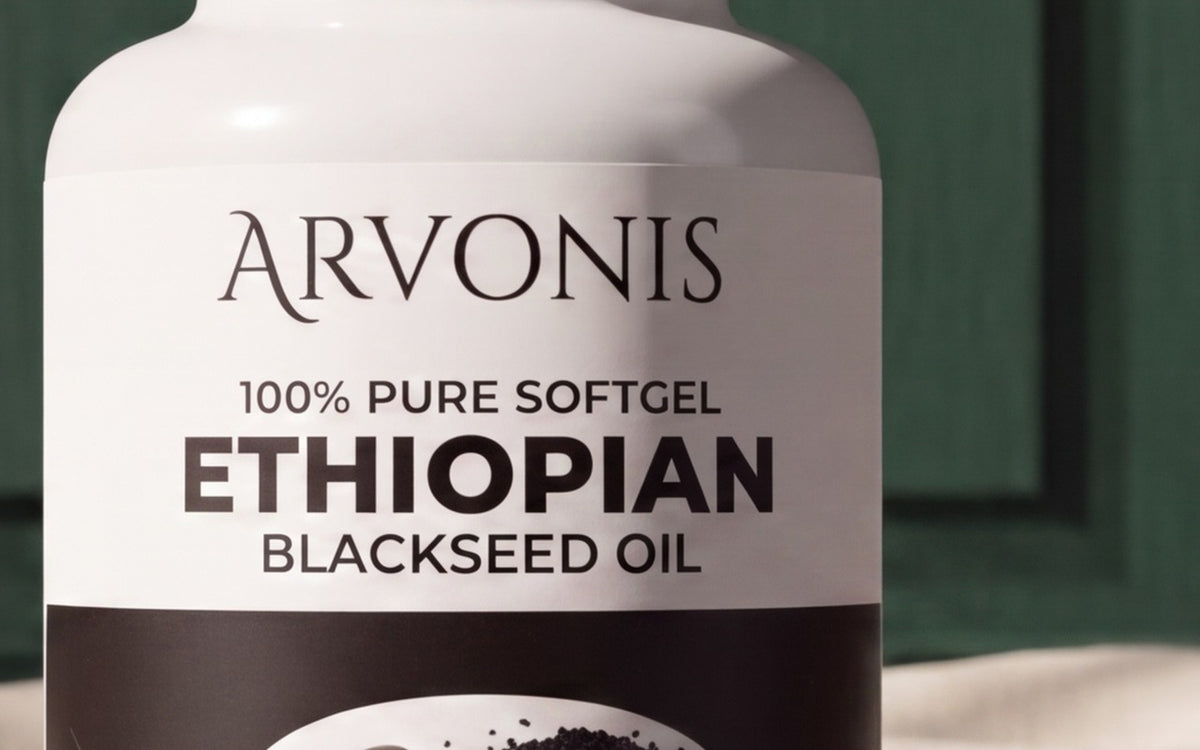
500 mg of black seed oil
How much oil is inside the softgel. Cheap to print, cheap to raise, and unrelated to strength. Two bottles can carry this same figure and share almost nothing else.
How much thymoquinone that oil carries
The compound the research measures and an independent lab can verify. Rarely printed. In the 2022 test, this is where the 260-fold gap lived.
Four reasons a 260-fold spread can sit on one shelf
Nothing requires the figure to be declared
A label must declare its ingredients and their amounts. It does not have to declare how much of the active constituent inside an ingredient is present. Silence is the default here, and the default is perfectly legal.
Milligrams of oil are the easy number to compete on
Raising oil per softgel costs very little. Raising thymoquinone means paying for better seed and a gentler press. One of those shows up on the front of a bottle. The other does not — so that is where the competition goes.
The same plant does not give the same oil
Origin, growing conditions, harvest and pressing method all move thymoquinone. Two producers can act in complete good faith, print identical labels, and ship two materially different products.
Nobody is checking on your behalf
The team that ran the 2022 test said so themselves: products of this kind need standardising and regulating for thymoquinone content, so that a buyer can know what they are getting.¹ Until that happens, the only check in the system is a company that measures the figure and prints it anyway.
Until this category is standardised, the only thing between a buyer and a 260-fold gamble is a brand willing to publish its own number.
The 2022 analysis measured eleven commercial products and called for exactly that standardisation.What thymoquinone actually is
Black seed — Nigella sativa — has been used across the Middle East, North Africa and South Asia for roughly two thousand years.³ That history is why the plant was investigated in the first place. It is not evidence that the plant does anything, and it should not be read that way.
What the modern work did was narrow the plant down to a marker. Thymoquinone is the constituent researchers quantify, and the one an independent laboratory can verify in a finished batch.
It is, in other words, the only part of a black seed oil bottle that can be checked rather than claimed. Which makes its absence from most labels the most interesting fact about this entire category.


Identical softgel. Identical declared 500 mg. The only thing that changed is the one figure the label never had to print.
Three things have to line up before a printed number means anything
A figure on a label is only worth reading if all three of these hold at once. Any one of them missing and the number drifts back toward marketing.
A single named origin
Seed pooled from several sources averages away whatever made any single source good, and makes the result impossible to repeat. Ours is single-origin Ethiopian highland seed, from the same growing region every release.
Cold-pressed, and nothing added
Heat and solvent extraction are faster and cheaper, and they cost you the fragile part of the oil. The seed should leave the press as oil, and leave with nothing else in it.
Measured per batch — then printed
A figure measured once at launch is a marketing asset. A figure verified for the batch in your hand, by a laboratory that does not work for the brand, and printed where you can read it before you pay, is a specification.
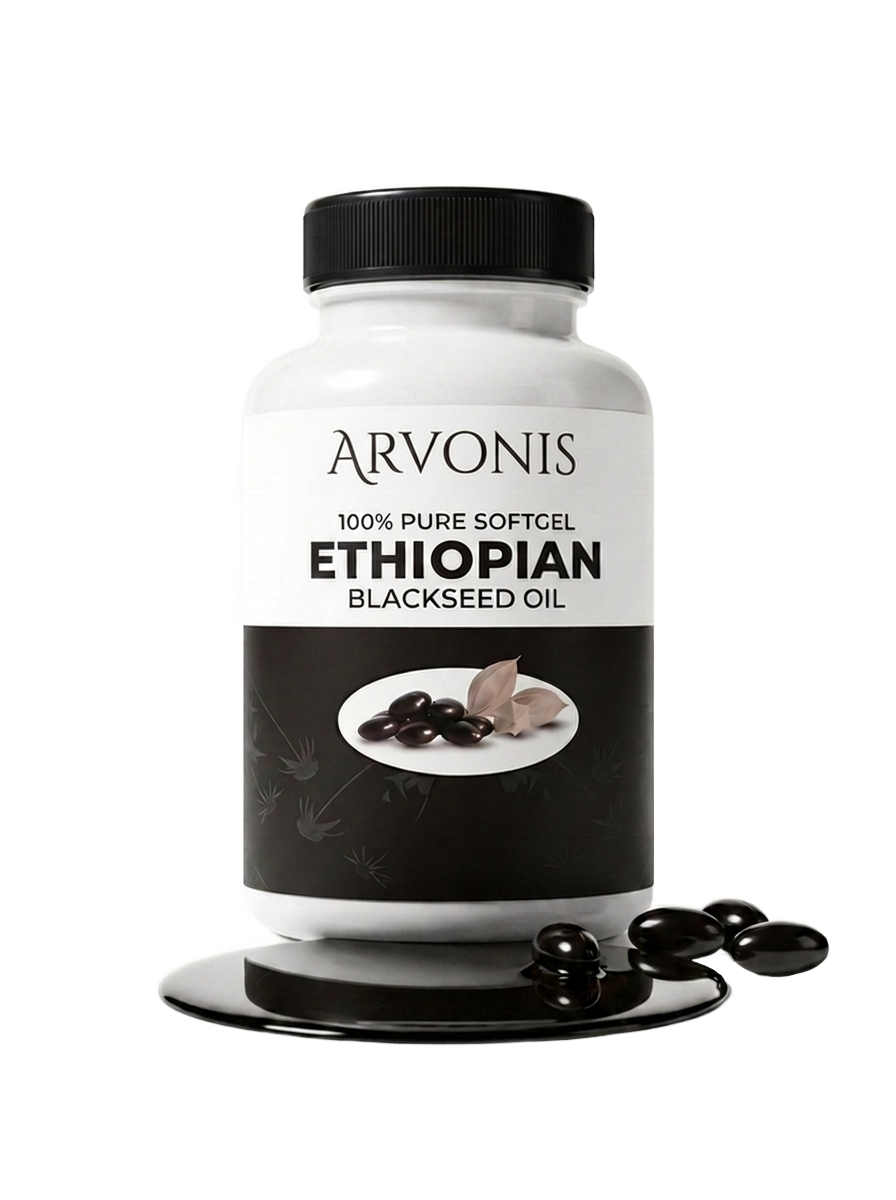
Arvonis™ Ethiopian Reserve
One ingredient: cold-pressed Ethiopian black seed oil in a softgel. No blend, no carrier oil, no filler, nothing to dilute the figure on the front.
Every release is standardised to up to 4.64% thymoquinone, verified for that batch by a third-party laboratory, and the number is printed where you can read it before you buy.²
- Single-origin Ethiopian highland black seed — same region every release
- Standardised to up to 4.64% thymoquinone, printed on the label²
- Cold-pressed — no heat extraction, no solvents, no carrier oil
- Third-party tested batch by batch before release
- Non-GMO · Gluten-free · Alcohol-free · Ships from the US
Two softgels a day, with food. Sixty softgels to a bottle, so one bottle is one month. That is the entire protocol — there is nothing else to add, and nothing else to remember.
Single ingredient · Cold-pressed · Third-party tested · Stated potency, printed on the label
Three people who kept taking it
Their words, lightly trimmed for length. They describe individual experience, not a result you should expect.
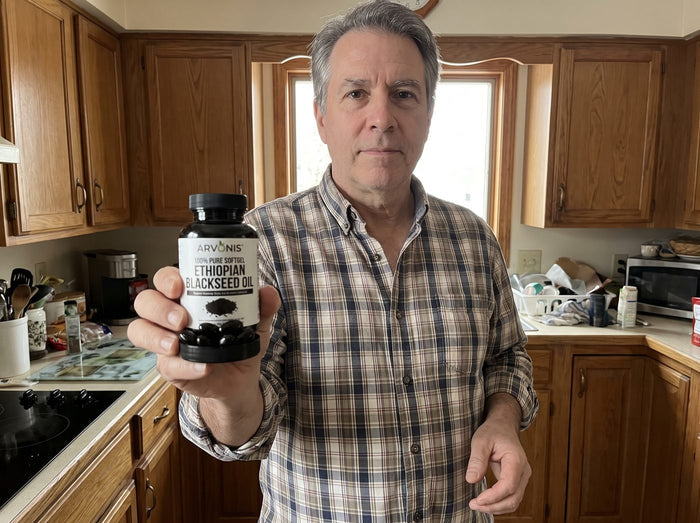
“By lunch my stomach already felt heavy and my belt seemed tighter than it did that morning. Wasn’t looking for another fat burner — wanted something that supported digestion and overall balance from within. Simple enough to take every day, and that consistency is what made it stick.”
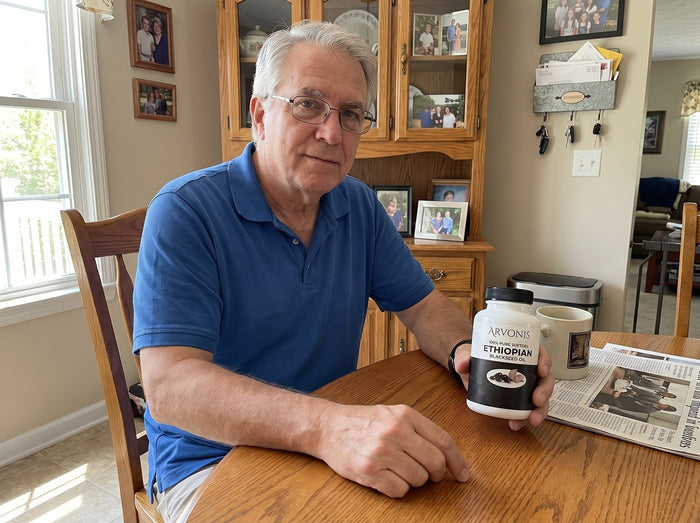
“My afternoons had become predictable: eat lunch, lose momentum, reach for more coffee. Chose Arvonis because it wasn’t positioned like a stimulant — it felt more like daily support for the systems behind energy and resilience. Two softgels with breakfast is the easiest part of my routine now.”
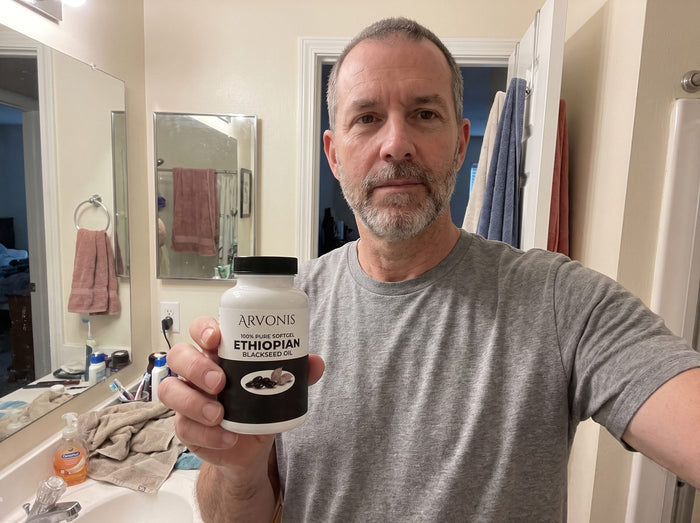
“Third bottle now. Every one has looked and smelled the same, which was not true of the other brands I tried. Ordering is simple and it shows up fast.”
The Current Release
Free shipping on every order · 90-day money-back guarantee · ships from the US
Single ingredient · Cold-pressed · Third-party tested · Stated potency, printed on the label
What to check on any black seed oil — including ours
You should not have to take our word for a single line of this, so here is the test we would want applied to us.
Turn over whichever bottle you are considering — ours or anyone else’s — and look for four things.
A named origin. Not “globally sourced”. A place.
A stated thymoquinone level. A number, on the label, before you pay.
Third-party verification of the batch you are buying — not of a sample taken two years ago.
A return window long enough to judge a daily habit rather than a single dose.
If a bottle cannot answer those four, the milligrams on the front are not telling you what you think they are. That was true of most of the eleven products in the lab test. On the evidence of any supplement aisle, it is still true today.
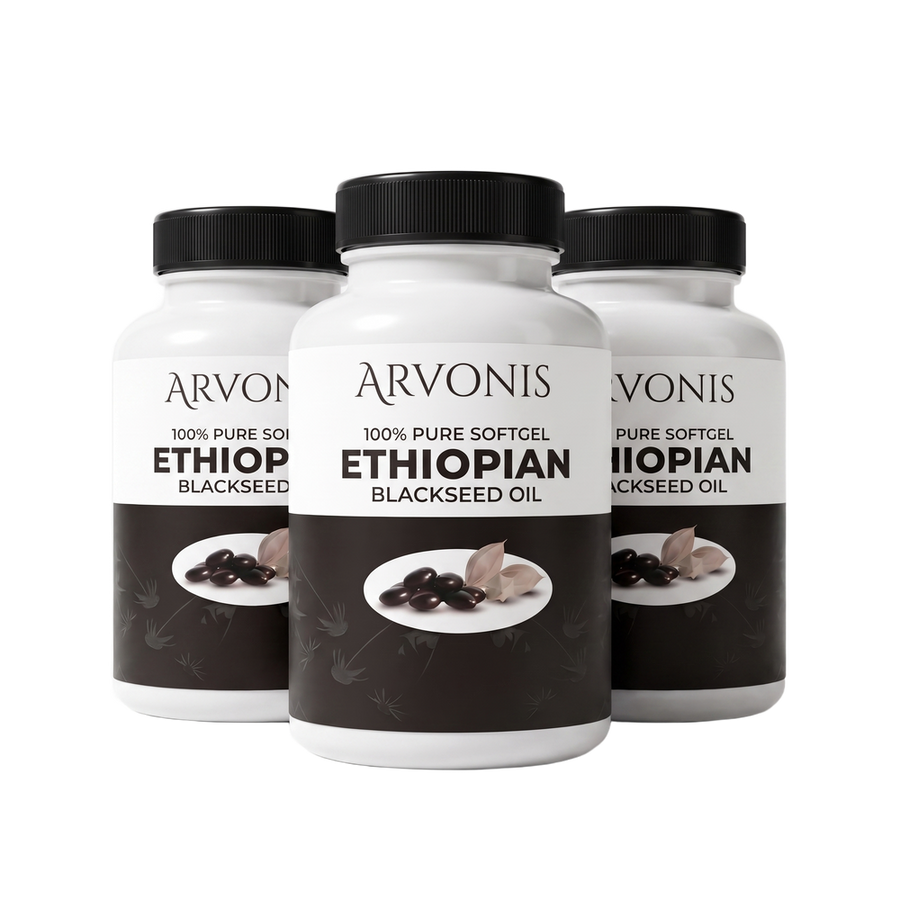
Buy 2, Get 1 Free
- 90-Day Money-Back
- Ships from the US
- Single Ingredient
- Third-Party Lab Tested